
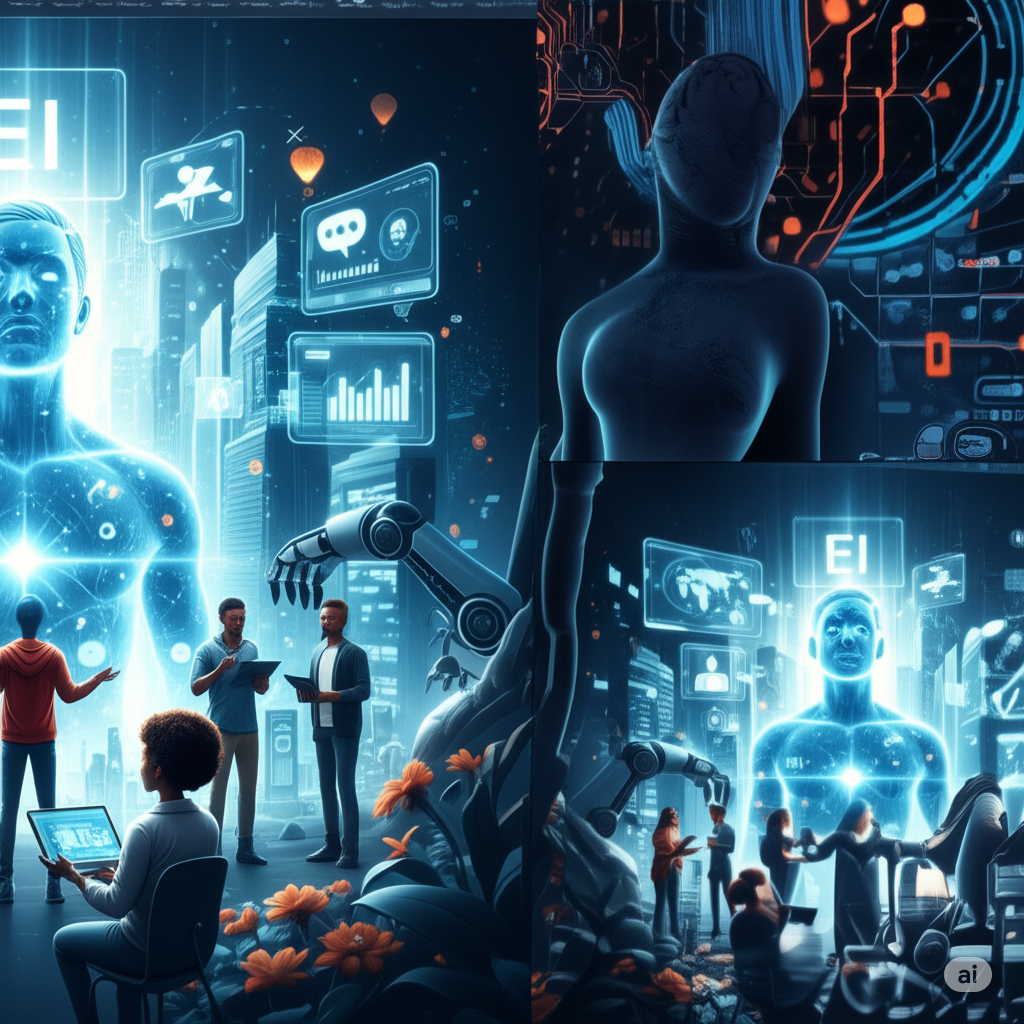
How self-awareness, empathy, and emotionally skilled leadership keep you relevant, resilient, and in demand as artificial intelligence reshapes work.
Artificial Intelligence (AI) is transforming industries at lightning speed; automating repetitive tasks, analyzing data faster than ever, and even taking on creative roles. While this technological revolution may feel intimidating, there’s one skill that AI can’t replicate: Emotional Intelligence (EI).
Emotional Intelligence is the human edge that will keep professionals and leaders relevant, impactful, and successful in a world where machines are becoming more capable every day.
What is Emotional Intelligence?
Emotional Intelligence is the ability to recognize, understand, and manage your own emotions, while also navigating the emotions of others effectively. It’s about self-awareness, empathy, resilience, and building strong relationships. All vital in personal and professional growth.
AI might be able to calculate, analyze, and process, but it can’t connect emotionally, build trust, or inspire human beings the way we can. That’s why EI is no longer just a “soft skill”, it’s a critical power skill for the future of work.
Why Emotional Intelligence Beats AI
- Empathy Creates Connection
Machines can’t feel, but people crave understanding and connection. Empathy helps you build genuine relationships with clients, teams, and colleagues which is something no algorithm can replicate. - Adaptability in Change
As industries evolve with AI, those with high EI can navigate uncertainty, adapt their mindset, and lead with confidence instead of fear. - Influence and Leadership
AI can provide data-driven insights, but it can’t motivate or inspire. Leaders with strong emotional intelligence know how to bring out the best in people, create a shared vision, and foster trust. - Resilience and Stress Management
While AI works 24/7, humans need rest, balance, and mental resilience. EI helps us manage stress, avoid burnout, and thrive under pressure. These are skills that make us invaluable in high-performance environments.
How to Build Your Emotional Intelligence
- Self-Awareness – Notice your triggers, strengths, and areas for growth. Journaling and regular reflection can help.
- Self-Regulation – Learn to pause before reacting. Practice mindfulness or breathwork to stay calm in high-stress moments.
- Motivation – Set meaningful goals and stay focused on your bigger “why,” even when challenges arise.
- Empathy – Practice truly listening to others. Seek to understand before being understood.
- Social Skills – Strengthen your communication and conflict resolution abilities. Collaboration is a key future-proof skill.
The Future Belongs to the Emotionally Intelligent
AI will keep evolving, but our human advantage lies in emotional awareness, creativity, and connection. By developing your emotional intelligence, you’re not just staying ahead of AI. You are positioning yourself as a leader in this new era.
Are You Ready to Future-Proof Your Success?
I coach professionals and leaders to strengthen their emotional intelligence, build resilience, and thrive in a world of rapid change. If you want to confidently navigate the age of AI, now is the time to invest in your most powerful tool, “YOUR MIND“.